He helped create the launch systems that made the American space age possible.
Explorer 1, Mercury-Redstone, the Saturn family, Apollo, and early Skylab planning all bear the imprint of teams he led or helped shape.

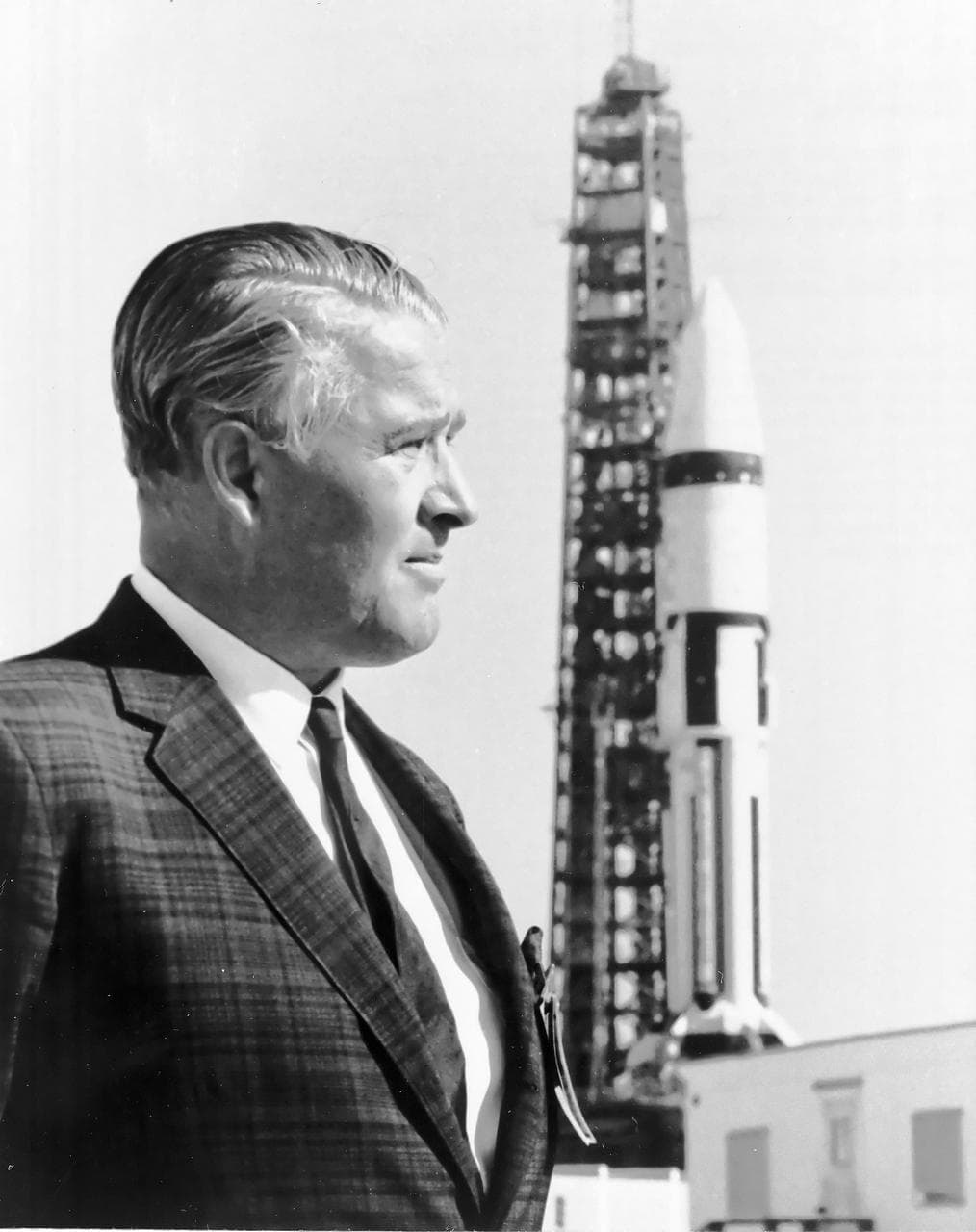
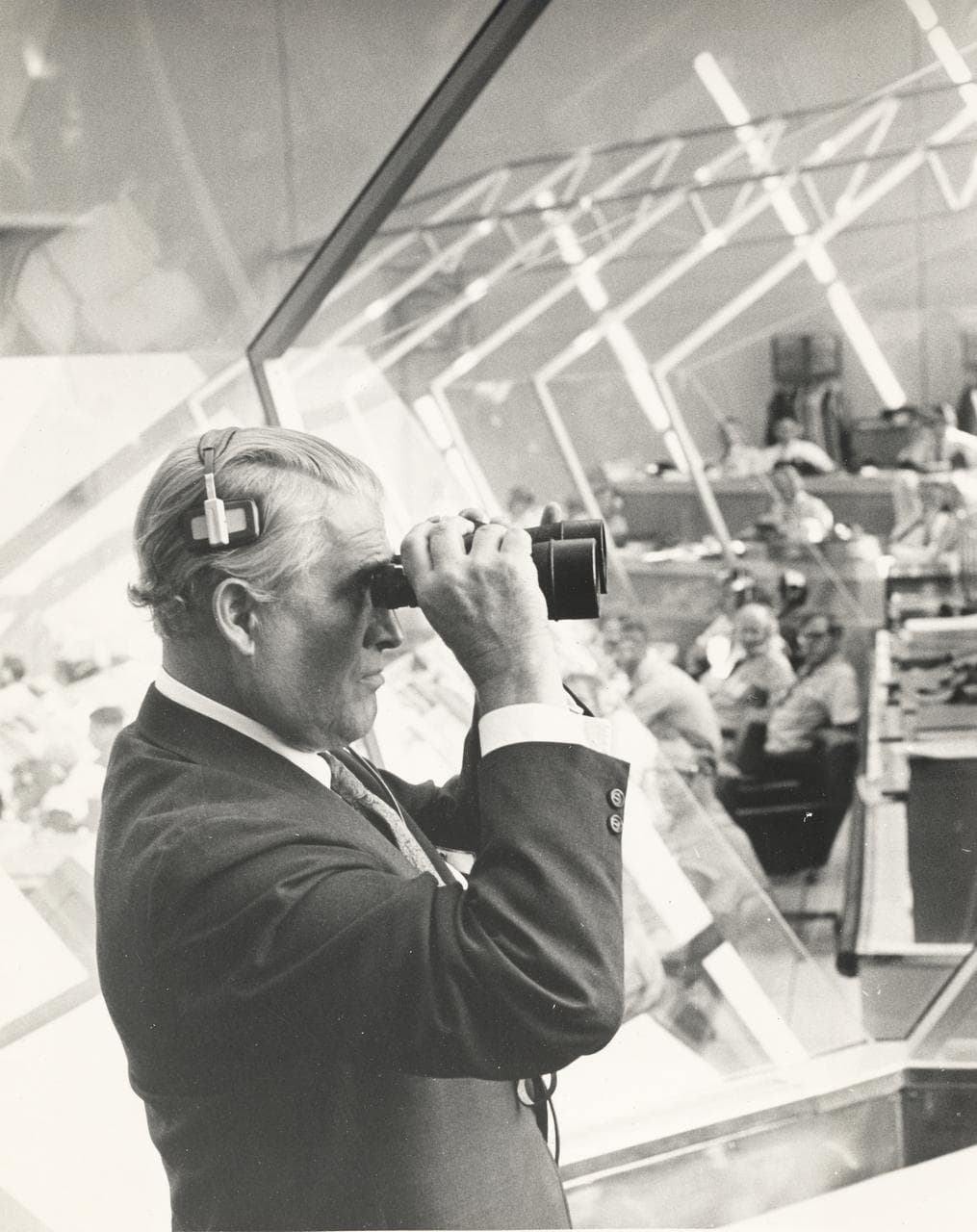
Wernher von Braun turned large rocket programs into working national systems. He also built his early career inside Nazi Germany’s weapons program, whose V-2 production relied on brutal forced labor. Both truths belong in the same record.
Von Braun’s greatest NASA contribution was not a single engine or drawing. It was his ability to align propulsion, structures, guidance, testing, contractors, budgets, and people around one unforgiving objective: a launch vehicle that worked as a complete system.
As the first director of NASA’s Marshall Space Flight Center, he led the team responsible for the Saturn launch vehicles. His engineers pushed hardware through full-scale testing and embraced “all-up” flight tests—testing complete stages together—to compress the schedule without surrendering systems discipline.
Explorer 1, Mercury-Redstone, the Saturn family, Apollo, and early Skylab planning all bear the imprint of teams he led or helped shape.
He joined the Nazi Party and the SS. Thousands of prisoners died producing V-2 weapons at Mittelwerk. Technical brilliance does not erase complicity or suffering.
The arc is not a clean redemption story. It is a record of capability, ambition, institutional choices, and unresolved responsibility.
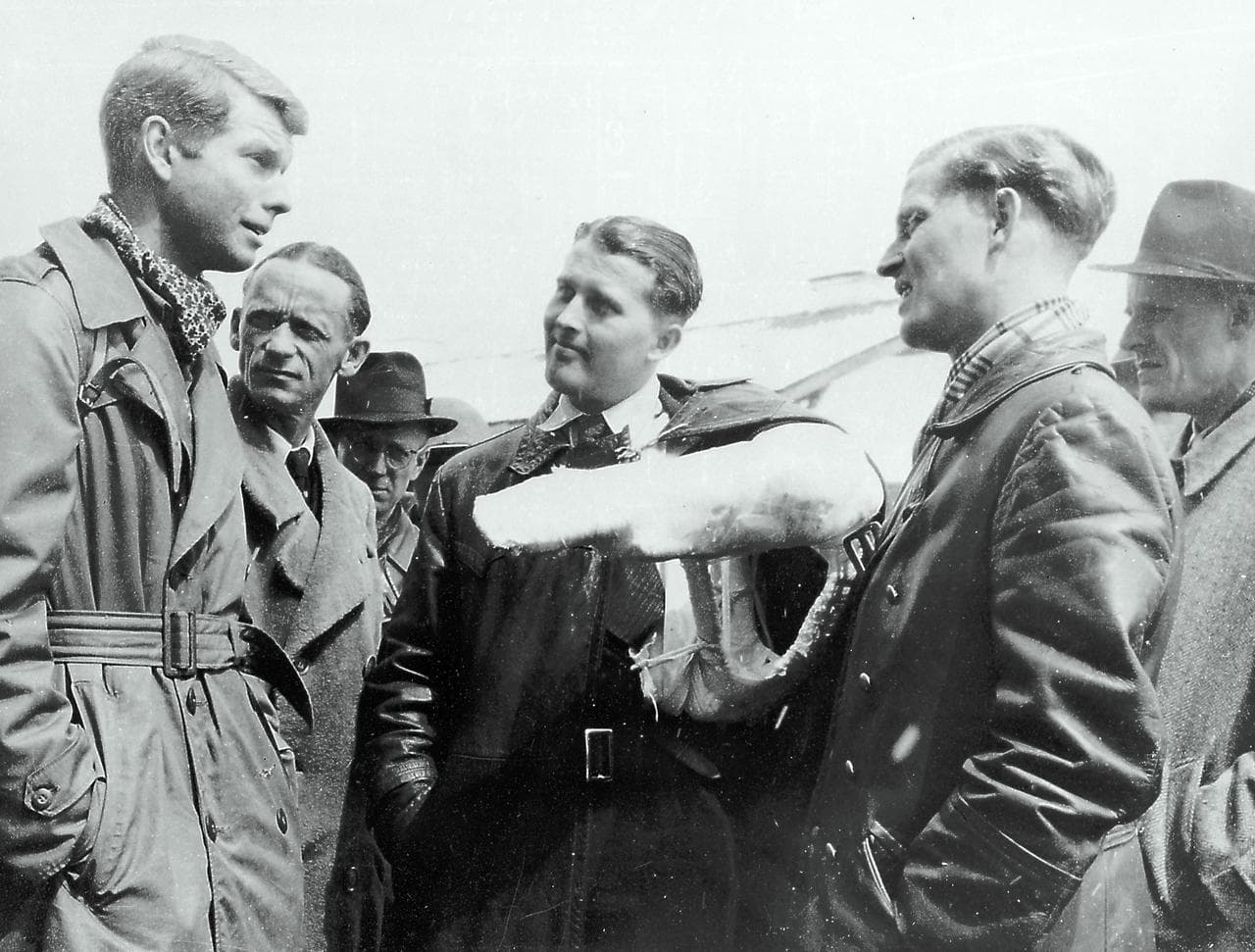
The United States moved von Braun and other German specialists into its rocket program. Officials minimized or sanitized parts of their Nazi records, prioritizing strategic advantage as the Cold War began.
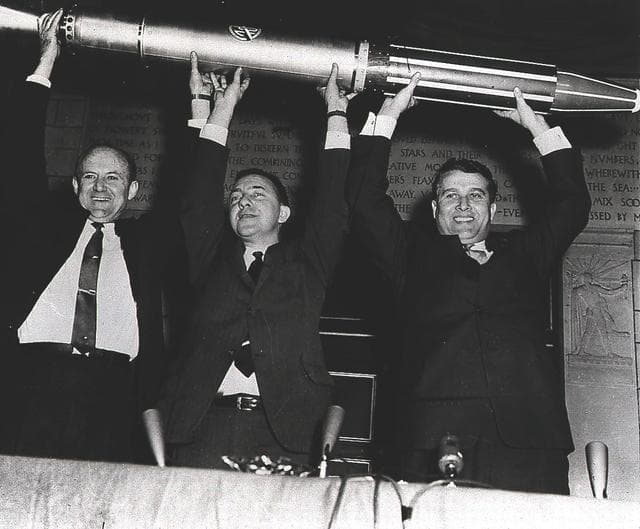
A Juno I launched America’s first satellite. The mission answered Sputnik and returned data that led to the discovery of the Van Allen radiation belts.
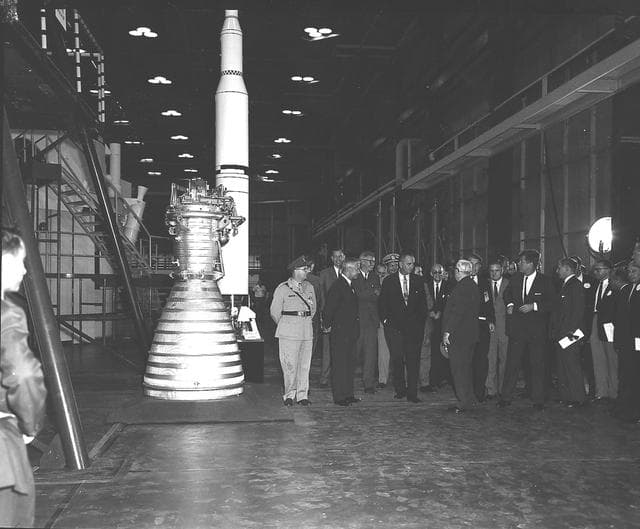
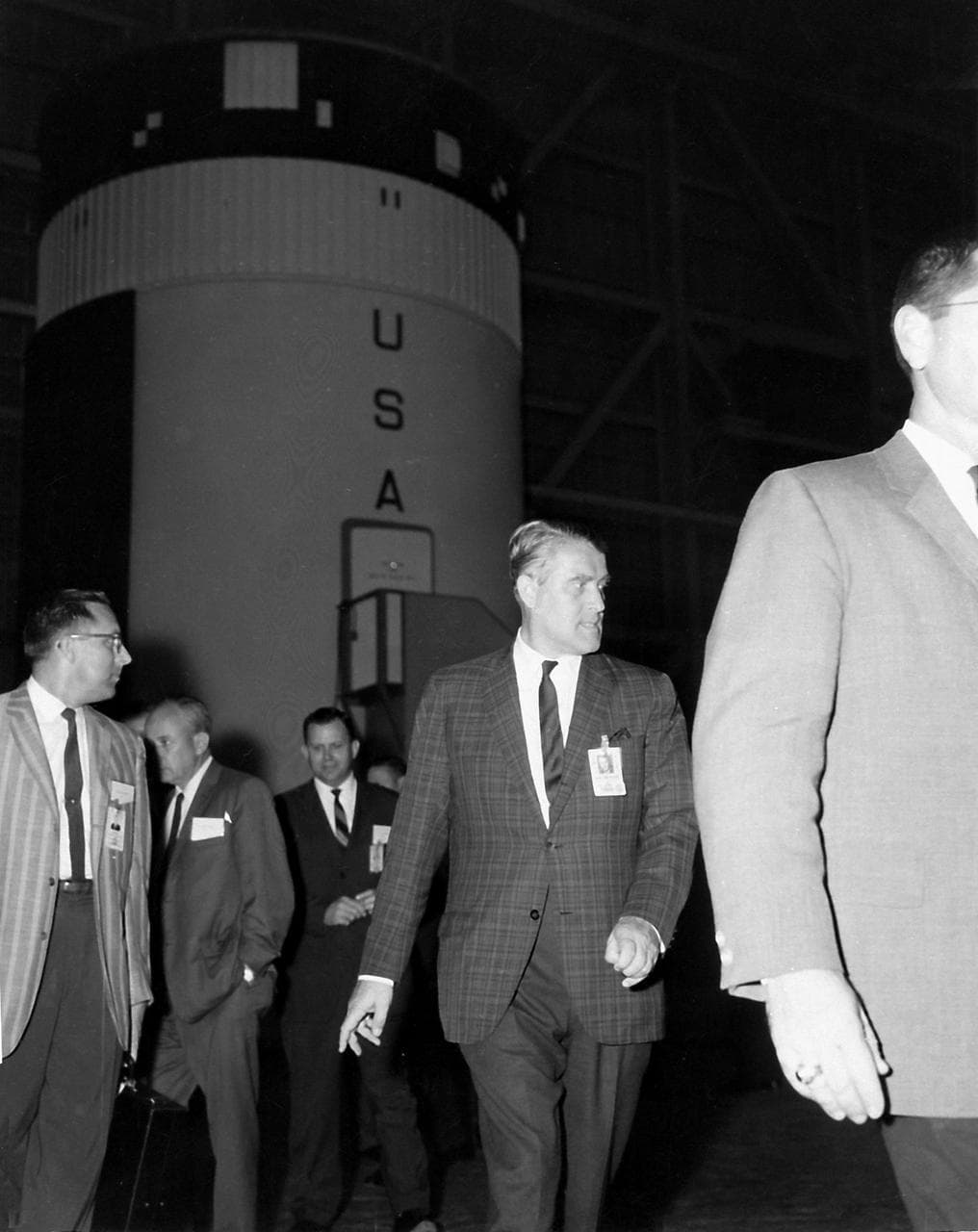
Von Braun became Marshall’s first director in 1960. His team ultimately accepted lunar-orbit rendezvous, the architecture that let a smaller lander descend while the command module remained in orbit.
The 363-foot vehicle produced roughly 7.5 million pounds of thrust at liftoff. Its success carried three astronauts toward the first human landing on another world.
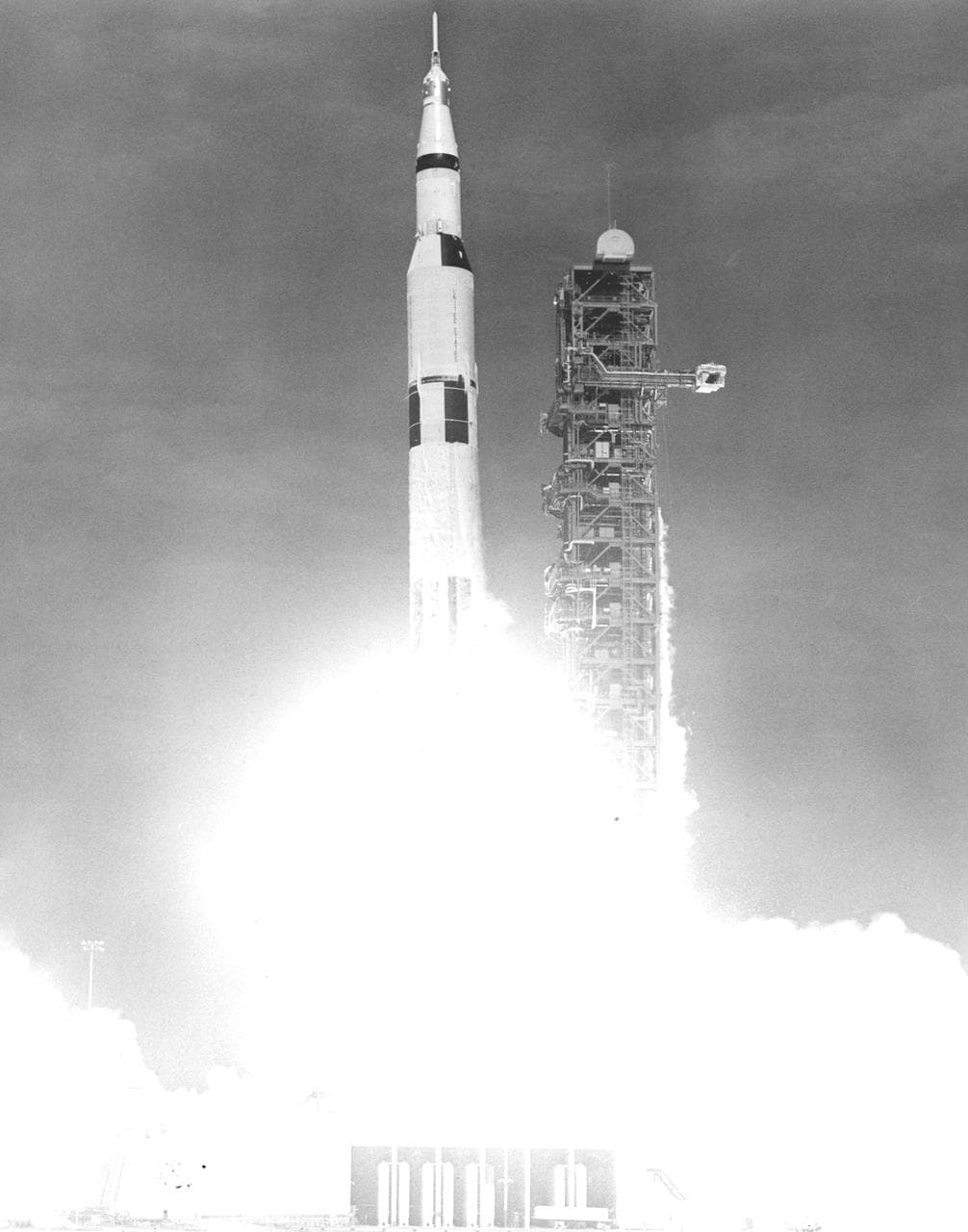
Each program taught the next one how to manage greater thrust, more complex staging, and higher stakes. The result was not one giant leap in engineering, but a disciplined sequence of increasingly complete systems.
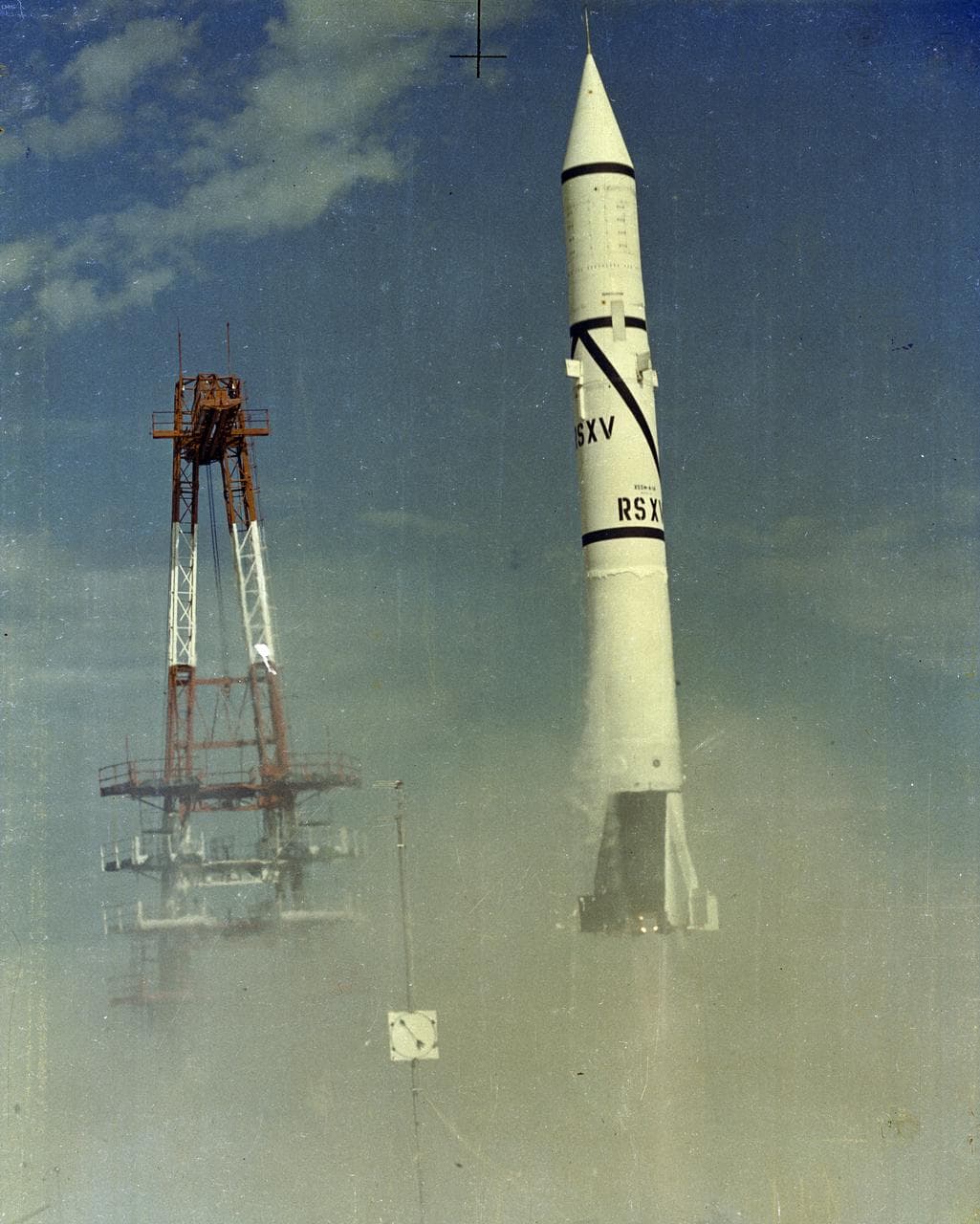
“The rocket worked because an immense human system worked first.”
Design reviews, test stands, factory floors, and flight data kept management connected to physical reality.
“All-up” testing exposed interactions that isolated component tests could miss—and saved time in the race to the Moon.
Success depended on the boundaries between engines, stages, guidance, ground support, contractors, and mission operations.
Ambition mattered because teams could convert it into testable hardware, schedules, and accountable decisions.
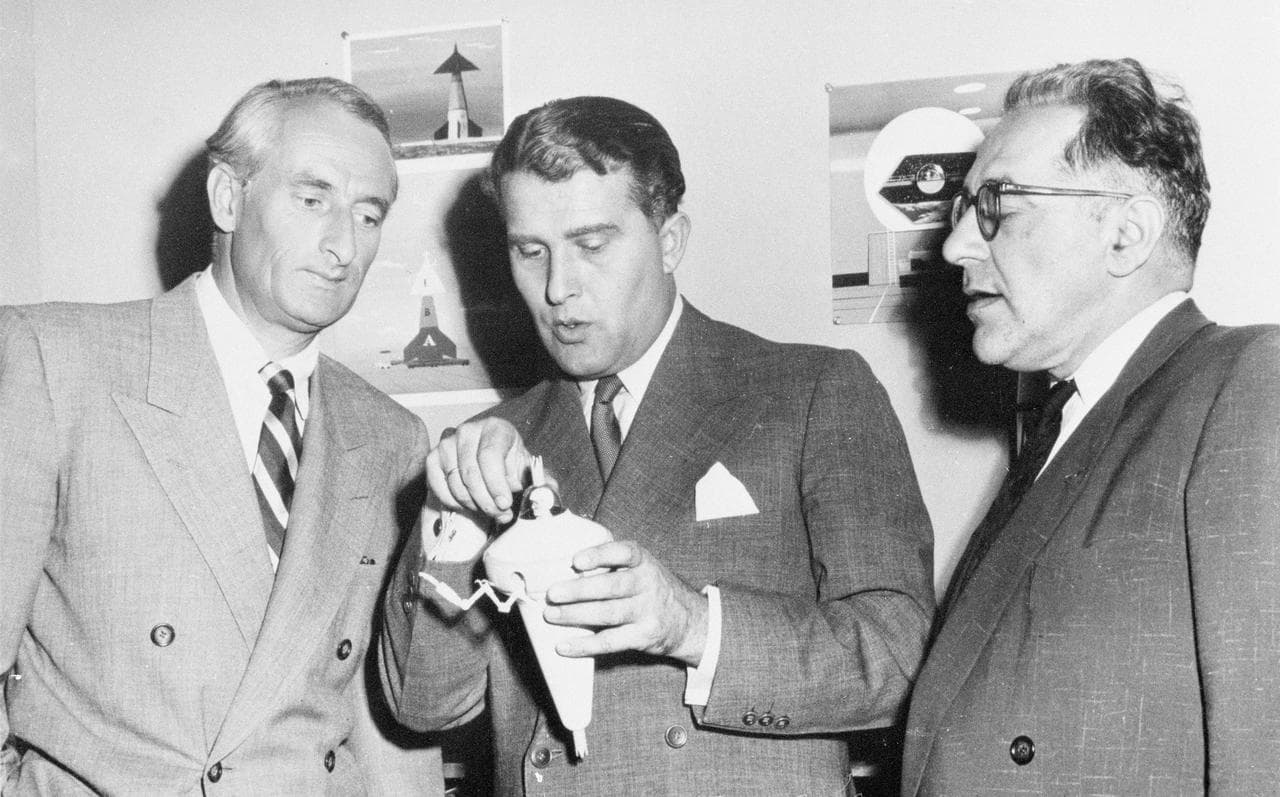
Articles in Collier’s and three Walt Disney television programs turned orbital stations, lunar travel, and Mars expeditions into visual, understandable systems for a mass audience.
The 1955 broadcast Man in Space reportedly reached about 42 million viewers. That public storytelling helped move rocketry from a specialist pursuit into a national expectation.
V-2 rockets were produced underground at Mittelwerk by prisoners subjected to starvation, disease, beatings, executions, and lethal working conditions.
Von Braun was a Nazi Party member and SS officer. Historians debate the extent of his direct authority over labor conditions, but not that he knew forced labor was being used. A truthful account of his NASA legacy must name the victims and the American decisions that obscured this history.
Remembering the achievement without the suffering is incomplete. Remembering the suffering does not require denying the engineering achievement. Ethical history has to hold both.
Von Braun advocated reusable spacecraft, orbital stations, long-duration laboratories, and human missions to Mars. Some proposals were too costly or premature; others anticipated the architecture of later programs.
Research compiled from the supplied source document. Archival images courtesy of NASA. This site is independent and is not an official NASA publication.